Signs Your Concrete Needs Repair
Concrete is extremely strong and durable, but over time it can crack, shift, deteriorate, and weaken due to weather, moisture, and structural movement. Small concrete issues can quickly turn into larger structural problems if they are not repaired early. Knowing the warning signs of concrete damage can help property owners prevent expensive structural repairs and safety hazards.
Cracks in Concrete
Cracks are one of the most common signs that concrete needs repair. Not all cracks are structural, but they should always be monitored and inspected. Hairline cracks are usually caused by shrinkage during curing, but larger cracks may indicate structural movement, settlement, or water damage.
Common types of concrete cracks include vertical cracks, horizontal cracks, diagonal cracks, and surface cracks. Horizontal cracks are often the most serious because they can indicate structural pressure or foundation movement.
If cracks continue to grow, widen, or allow water to enter, concrete repair should be completed as soon as possible.
Concrete Spalling
Concrete spalling occurs when the surface of the concrete begins to flake, chip, or break apart. This often exposes the aggregate or reinforcing steel inside the concrete. Spalling is usually caused by water penetration, freeze thaw cycles, corrosion of reinforcing steel, or poor concrete installation.
Spalling is common on parking garages, balconies, steps, foundations, and concrete slabs. If left unrepaired, spalling can spread and weaken the structure.
Uneven or Sunken Concrete
If concrete slabs, walkways, or floors become uneven or start to sink, this usually means the soil underneath the concrete has shifted or settled. Uneven concrete can create trip hazards and may indicate underlying structural or drainage issues.
Sunken concrete is common in driveways, sidewalks, garage floors, and patios. Repairing uneven concrete early can prevent further movement and larger repairs.
Water Leaks Through Concrete
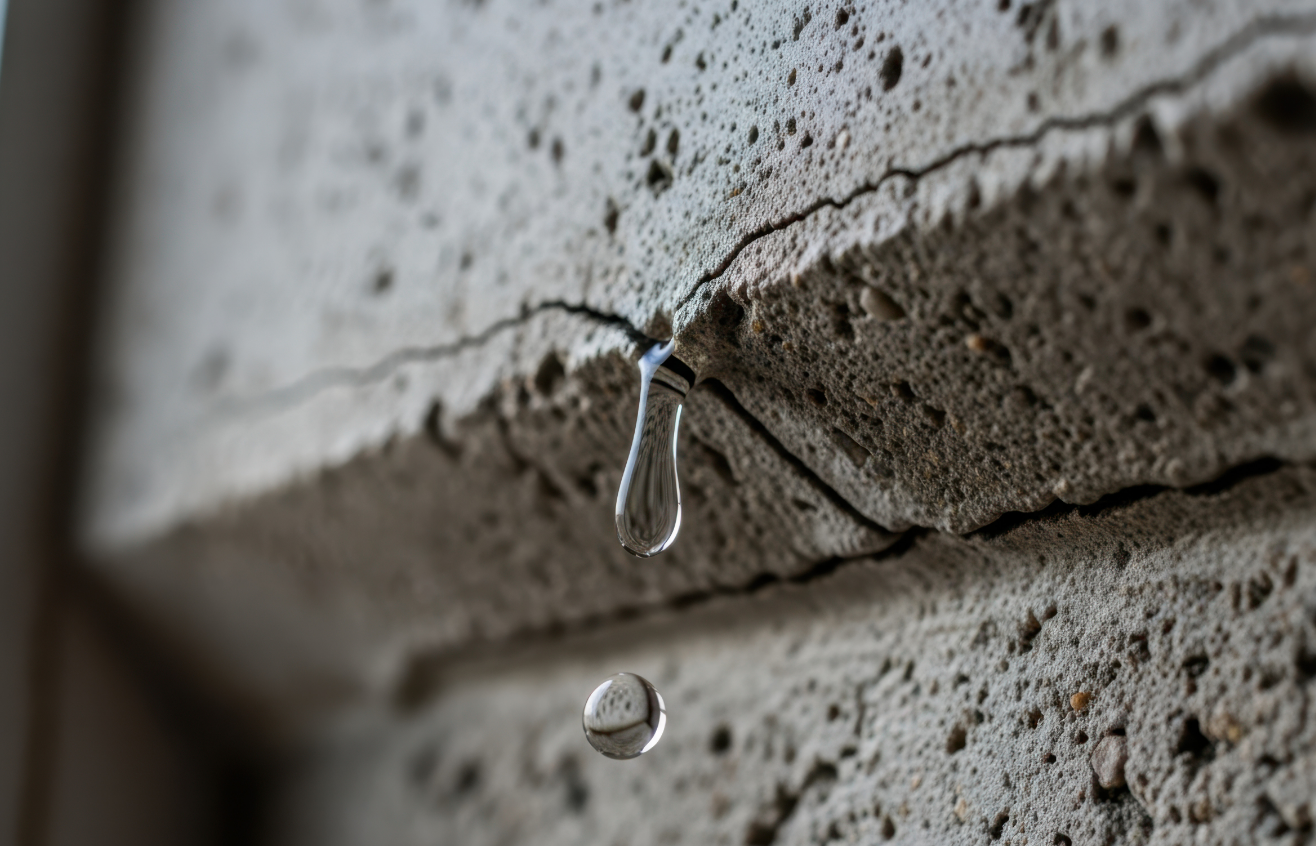
Concrete is porous, which means water can pass through it over time. If you notice water leaks, damp concrete, or moisture in basements, parking garages, or concrete structures, this may indicate cracks, failed waterproofing, or structural damage.
Water infiltration can cause reinforcement corrosion, concrete deterioration, mold growth, and structural weakening. Waterproofing and concrete repair are often needed to stop the damage from spreading.
Exposed Reinforcing Steel
If reinforcing steel (rebar) becomes visible through the concrete, this is a serious sign of concrete deterioration. This usually happens when concrete spalls or deteriorates due to water damage and corrosion inside the structure.
When steel reinforcement rusts, it expands and causes the surrounding concrete to crack and break apart. Structural concrete repair is typically required when reinforcement steel is exposed.
Concrete Surface Deterioration
Concrete that is scaling, flaking, crumbling, or wearing away is a sign that the surface is deteriorating. This is often caused by freeze thaw cycles, salt exposure, moisture, or age.
Surface deterioration is common on exterior concrete surfaces such as steps, walkways, balconies, and parking structures. Resurfacing or concrete restoration may be required to restore the surface and protect the structure.
When to Call a Concrete Restoration Contractor
If you notice cracks, spalling, uneven slabs, water leaks, exposed reinforcement, or surface deterioration, it is best to contact a concrete restoration or structural repair contractor. Small concrete repairs are much more affordable than major structural repairs or full concrete replacement.
Regular inspections and maintenance can extend the life of concrete structures and prevent costly structural damage.
Final Thoughts
Concrete damage often starts small but can quickly turn into serious structural problems if ignored. Watching for early warning signs like cracks, spalling, water leaks, and uneven concrete can help you repair damage early and protect your structure.
Concrete restoration and structural repair can restore strength, improve safety, and extend the life of concrete structures for many years.
.png)
.png)
.png)



.png)
.png)


.png)
.png)





.jpg)
.jpg)
.jpg)
.jpg)
.jpg)
.jpg)
.jpg)
.jpg)
.jpg)
.jpg)
.jpg)
.jpg)
.jpg)
.jpg)
.jpg)
.jpg)
.jpg)
.jpg)
.jpg)
.jpg)
.jpg)
.jpg)
.jpg)
.jpg)
.jpg)
.jpg)
.jpg)
.jpg)
.jpg)
.jpg)
.jpg)
.jpg)
.jpg)

Contact Us For A Free Consultation
Have questions or ready to start your masonry restoration project? Our dedicated team of masonry experts are here to help. Whether you’re exploring historical restoration, custom masonry modifications, or need expert brick repair, we’re just a call or click away.